MitoMEGA 2.0: the panel that shows its real numbers
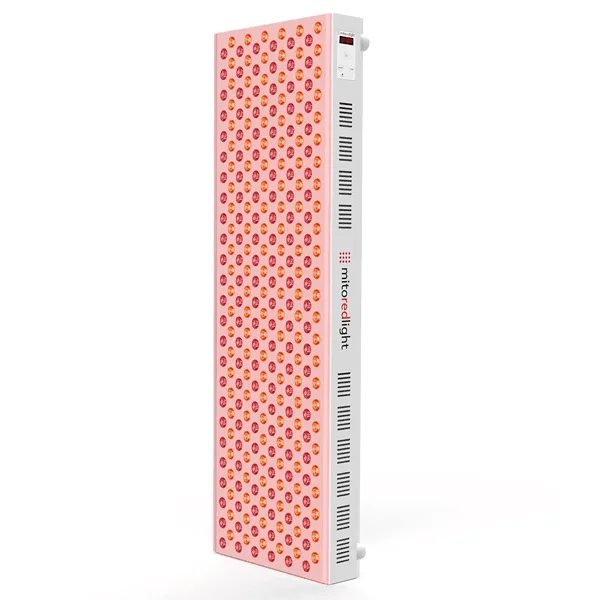
Red light panel marketing has a numbers problem. Makers quote irradiance figures measured with cheap solar meters, which read high on red wavelengths, and shoppers end up comparing fiction to fiction. Mito Red Light took an unusual path with the MitoMEGA 2.0: it publishes an independent lab measurement of more than 74 mW/cm2 at six inches alongside the flattering consumer-meter figure of 165-plus that everyone else leads with. On a tower that runs just north of $1,000, that honesty is the headline, and it changes how you should read every other spec sheet in the category.
What the buyer gets
The MitoMEGA 2.0 is a 36 by 12 inch panel, 3 inches deep, weighing 25 pounds, with 300 LEDs split evenly between 660nm red and 850nm near-infrared. There is no third or fourth wavelength and no way to run one bank without the other. A top-mounted digital control unit handles the single adjustment you get: a timer that runs from one minute to twenty.
Power draw is 450W, which sounds alarming until you do the math. A fifteen-minute session burns about 0.11 kWh, roughly two cents at typical US electric rates, so even daily use costs less per month than one fancy coffee. The panel carries an ETL listing and comes out of an ISO 9001 and 14001 certified, BSCI-audited facility, with a two-year manufacturer warranty behind it.
Mito runs its own Amazon storefront alongside mitoredlight.com, so either channel puts the sale and any return in the maker’s hands rather than a reseller’s. Owners report goggles and a door-hanging kit in the box, though at least one advised checking the contents on arrival before assuming everything shipped.
Where it earns the flagship money
Size is the first answer. Mid-tier panels in the few-hundred-dollar range cover a face and chest from a desk or door; a 36-inch, 300-LED tower covers torso to thigh in one hang, which is the difference between a targeted gadget and a piece of equipment you stand in front of. Anyone planning full-body sessions with a smaller panel ends up repositioning it three times per session, and most people stop bothering within a month. The MitoMEGA’s height mostly removes that friction, and it slots into Mito’s stand lineup if a door hang does not suit your space.
The second answer is the paperwork. Publishing a third-party lab number next to the solar-meter number tells you two things: what the panel actually delivers at six inches, and how inflated the industry’s standard measuring stick is. When a rival brand quotes 165 mW/cm2 with no methodology, you now have a basis for discounting it. That transparency does not make the light better, but it makes the purchase auditable, which matters when the check has four digits.
Owner reception backs the hardware up. It draws the strongest reception among the flagship panels we track, and reviewers describe a high-quality unit that several chose over rival brands after comparison shopping. That is a real sample, not a launch-week handful, though the feedback pool is modest rather than massive.
Where it falls short
Feature count is the obvious gap. Hooga’s ULTRA1500, which costs a few hundred dollars more, runs quad-chip LEDs with four wavelengths, lets you dim the red and near-infrared banks independently, adds a pulse mode, and includes a remote. The MitoMEGA gives you two wavelengths at full blast and a timer. If you want to tailor sessions rather than stand in front of a fixed light, Mito has nothing to offer you here.
The warranty tells a similar story. Two years is respectable, but Hooga covers three and adds a 60-day trial. On a product category where LED output degrades slowly over tens of thousands of hours, longer coverage is worth real money, and Mito is giving away that comparison point.
Smaller gripes: 25 pounds hanging on a door demands a solid door and a properly seated bracket, and Mito hosts no demo video of its own on the product page, only customer clips, so you are buying the physical unit somewhat sight unseen.
Who it fits
Buy the MitoMEGA 2.0 if you want a large-coverage panel from a brand whose output claims you can actually verify, and you have no interest in fiddling with brightness or pulse settings. It is the pick for the buyer who counts a lab report as a feature.
Skip it if adjustability matters to you; the Hooga justifies its higher tag with controls Mito does not attempt. Skip it too if you only plan to light your face and neck, because a mid-tier half panel covers that area at roughly a third of the outlay, and the extra 20 inches of tower would just light up your furniture. This panel earns its price on coverage and candor, and on nothing else.
The spec sheet
| LEDs | 300 LEDs, 50/50 split |
|---|---|
| Wavelengths | 660nm red + 850nm near-infrared |
| Irradiance | >74 mW/cm2 at 6 in (independent lab test); >165 mW/cm2 on consumer solar meters |
| Power draw | 450W |
| Size / weight | 36 x 12 x 3 in, 25 lb |
| Timer | Digital timer adjustable 1:00-20:00 minutes |
| Certifications | ETL listed; made in ISO 9001/14001, BSCI-certified facility |
| Warranty | 2 years (manufacturer) |
- Publishes lab-tested irradiance next to consumer-meter figures
- 300 LEDs on a 36-inch tower cover torso to thigh from a door hang
- Strongest owner reception of the flagship picks
- Same price at Amazon and the maker's own storefront
- ETL listed and built in an ISO 9001 certified facility
- Two fixed wavelengths; no dimming, pulse mode, or remote
- Two-year warranty trails Hooga's three years plus 60-day trial
- 25-pound tower needs a sturdy door mount or separate stand
- No maker-hosted demo video; only customer clips on the page
A big honest panel, minus the knobs
The MitoMEGA 2.0 is the flagship panel for buyers who want their money's worth documented. You get 300 LEDs of torso-to-thigh coverage, a lab-verified output figure almost no rival publishes, and a warmer owner record than most panels in its bracket carry. You give up the dimming, pulse control, and longer warranty Hooga offers for a few hundred dollars more. If you want a big, honest, fixed-output light with nothing to fiddle with, buy it. If you want adjustable sessions or only ever plan to light your face, your money belongs elsewhere.
Mito Red Light questions, answered once
Why does Mito publish two different irradiance numbers for the MitoMEGA 2.0?
The figure above 74 mW/cm2 at six inches comes from independent lab testing, while the 165-plus figure comes from the consumer solar meters most brands rely on, which read high on red light. Publishing both lets you weigh the panel against rivals' meter-based claims while knowing what it actually delivers.
What comes in the box with the MitoMEGA 2.0?
Owners report protective goggles and a door-hanging kit included, and one reviewer advised confirming both are present on arrival. Floor stands that fit the panel come from Mito's accessory lineup rather than the box.
Can the MitoMEGA 2.0 light a full body in one session?
The 36-inch panel covers torso to thigh at close range from a door hang. Head-to-toe coverage means stepping farther back, which cuts intensity, or repositioning between segments, so buyers set on close-range full-body sessions usually stack a second panel or move up a size class.