How to buy a red light panel
Red light panels turned into a real market while nobody was looking: $533.8 million in 2025, projected to pass $1.1 billion by 2033 per Grand View Research, with at-home handhelds, masks, and panels driving the growth. The hardware now spans pocket torches through 36-inch towers, and the spec sheets have not kept pace. Brands quote output numbers measured in ways that flatter their own gear, sell stands separately at surprising prices, and describe regulatory status in language that sounds weightier than it is. This guide decodes the five spec areas that actually separate models: wavelengths, irradiance claims, size and mounting, controls, and warranty terms. We cover what these devices are and what their makers claim about the hardware, nothing more; what light does or does not do for a person is outside a spec sheet’s jurisdiction and outside this guide’s.
Wavelengths, mostly a settled question
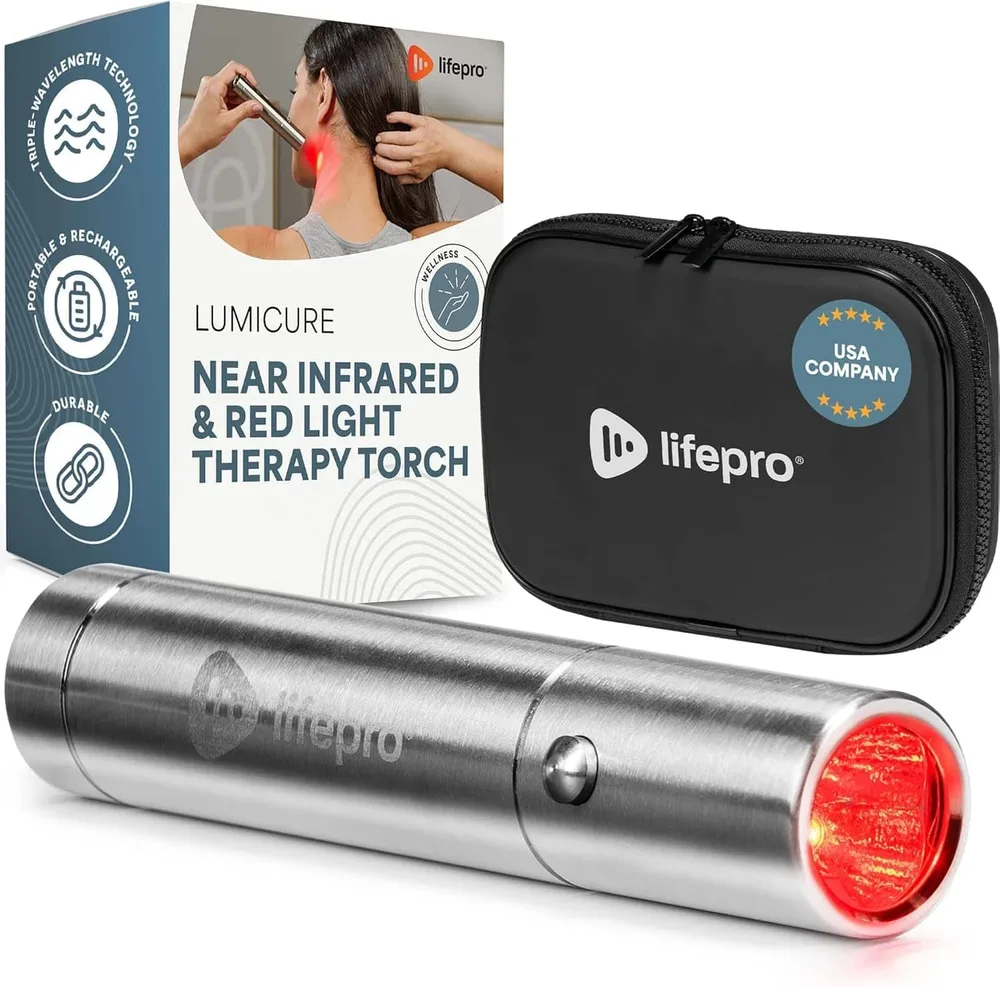
660nm red paired with 850nm near-infrared is the standard across Amazon’s best sellers. Mito Red Light builds its Original 2.0 panels on an exact 50/50 LED split of the pair, and Hooga, Bestqool, Wolezek, and Megelin all run the same combination, so wavelength choice rarely separates mainstream panels. Handheld devices sometimes add 630nm on the red side, as LifePro’s LumiCure torch does. A smaller premium tier goes wider: Hooga’s ULTRA360 line steps up to four wavelengths, 630, 660, 810, and 850nm, with adjustable brightness and a pulse mode per its listing.
Know one quirk before your first session. Because 850nm sits outside the visible spectrum, a panel running its near-infrared LEDs looks half dark even when everything works. Wolezek prints that warning directly on its listing, since a seemingly half-dead panel is the most common mistaken defect complaint in owner reviews.
Irradiance, the number that needs a footnote
Irradiance, quoted in milliwatts per square centimeter, describes output intensity at a measured distance, and no spec gets distorted more by methodology. Mito Red Light publishes two figures for the same MitoMAX 2.0 panel at 6 inches: above 155 mW/cm² on a consumer solar-power meter and above 70 mW/cm² by lab-grade measurement. Same panel, same distance, and the meter choice roughly doubles the headline. Credit Mito for printing both; most brands show only the bigger number.
Distance is the second lever. Bestqool quotes the BQ60’s 95.6 mW/cm² at 3 inches, half the distance most rivals use, which flatters the figure in any side-by-side. Megelin claims 200 mW/cm² without stating a distance anywhere on its product page. A number missing its distance and meter type is decoration, not data.
Independent instruments usually read below the marketing. Light Therapy Insiders measured the Hooga HG300 at roughly 55 mW/cm² against Hooga’s claimed 73 mW/cm² at 6 inches, and still called the panel a strong value. GembaRed’s testing of a budget Wolezek bulb found intensity under the advertised figure, heavy flicker, and electric-field EMF above 1000 V/m at close range, falling to near zero by 6 inches. Flicker and EMF never appear on a listing, so look for an instrumented third-party review before buying; the same outlet measured the HG300’s LEDs flickering at about 100 Hz, a detail Hooga’s page does not mention.
Size and mounting, matched to your actual wall
| Tier | Typical build | Weight | Placement |
|---|---|---|---|
| Handheld torch | Cordless wand, battery powered | Pocketable | In your hand |
| Compact panel, 60 LEDs | 12 to 13 inches tall | 4.8 to 6 lbs | Kickstand, door hook, tabletop |
| Tower, 200 to 300 LEDs | 36-inch LED column | 20 to 25 lbs | Hanging kit or floor stand |
Coverage tells you which tier you need. Bestqool documents the compact BQ60’s coverage at 17.2 by 11.8 inches from 6 inches away, face-and-shoulders territory rather than full body. Mito’s own comparison table lays out the ladder inside one product family: 60 LEDs and 6 pounds at the bottom, 300 LEDs and 25 pounds at the top. Anything torso-scale in one session means a tower, and a tower means hardware, because a 20-pound panel hanging from a door needs mounts you trust. Floor stands often cost extra; Megelin sells its horizontal stand separately for the same money as its entire entry-level panel, which is worth knowing before checkout. At the budget end the included mounts disappoint, and Wolezek owners report the bundled clamp cannot reliably hold the weight of the lamp it comes with.
Leave breathing room too. Fan-cooled designs, from the HG300’s single fan to the MitoMAX 2.0’s pair of auto-activating fans, need airflow clearance, and makers tie their 50,000-hour-plus LED lifespan claims to that cooling.
What the tiers cost
Handhelds sit around the $100 mark, compact 60-LED panels cluster just under $200 at list, and towers run in the $700 to $1,200 range depending on length. Street prices frequently undercut those list figures, so never assume the sticker.
Timers and controls at each tier
Session timers are now universal, even at the bottom. Wolezek’s budget controller offers auto-off at 5, 10, 15, 20, or 30 minutes plus five brightness levels and a pulse function. LifePro’s handheld keeps it to one button with a fixed 5-minute shut-off. Mid-tier panels move to touch interfaces, with the Bestqool BQ60 pairing touch controls and an auto timer. The control feature that separates premium panels is independent channel switching: the MitoMAX 2.0 runs red only, near-infrared only, or both at once, and Megelin’s tower switches its red and NIR banks separately.
Warranties, goggles, and paperwork
Warranty terms spread wider than most spec gaps and deserve equal weight in the decision. Megelin backs its towers for 1 year, Bestqool and Mito Red Light offer 2 years, and Hooga leads the group with 3 years plus a 60-day trial period. Protective goggles ship in the box with most mainstream panels, including the HG300, the BQ60, and Wolezek’s tripod lamp kit.
Regulatory badges need translation. Bestqool markets the BQ60 as an FDA Class II device that is 510(k) exempt, Megelin calls its panel an FDA Class II medical device, and Mito lists FDA registration alongside ETL listing, an electrical-safety mark, and FCC compliance. Each of those statuses is self-described on the brand’s own product page. Read them as filing and electrical-safety paperwork, never as an outside referee’s verdict on output claims.
The short version
A handheld makes sense when portability rules and spot use is the plan. Compact panels suit a first purchase for a desk or tabletop, and a brand that publishes its measurement method, warranty terms, and included accessories is the safest place to start. Towers earn their money only when you want torso-scale coverage in one session and have a door, wall, or stand budget ready to hold 20 pounds. Walk away from any listing that omits its irradiance measurement distance, publishes no warranty terms, and has no manufacturer website behind it. In our research one budget brand managed all three at once, and no pulse mode compensates for nobody standing behind the product.
Questions, answered once
Why does half of my red light panel look like it is off?
850nm near-infrared light is invisible to the eye, so LEDs running that wavelength do not glow visibly. A panel with a mixed array looks half dark by design, and Wolezek states this directly on its listing because it is the most common mistaken defect report.
Can I compare irradiance numbers between two brands?
Only when the measurement distance and meter type match. Mito publishes both a consumer-meter and a lab-grade figure for the same panel at the same distance, and they differ by roughly double. Normalize for distance and favor brands that state their method.
Do red light panels come with eye protection?
Most mainstream panels ship goggles in the box, including the Hooga HG300, the Bestqool BQ60, and Wolezek's tripod lamp kit. Check the included-items list before buying and follow the maker's usage instructions.
How heavy is a full-length tower panel?
The 200-LED MitoMAX 2.0 weighs 20 pounds, and 300-LED models run about 25 pounds per Mito's spec table. Hanging one calls for solid hardware, and floor stands are often a separate purchase.