Red light device sizes: torch, panel, or tower
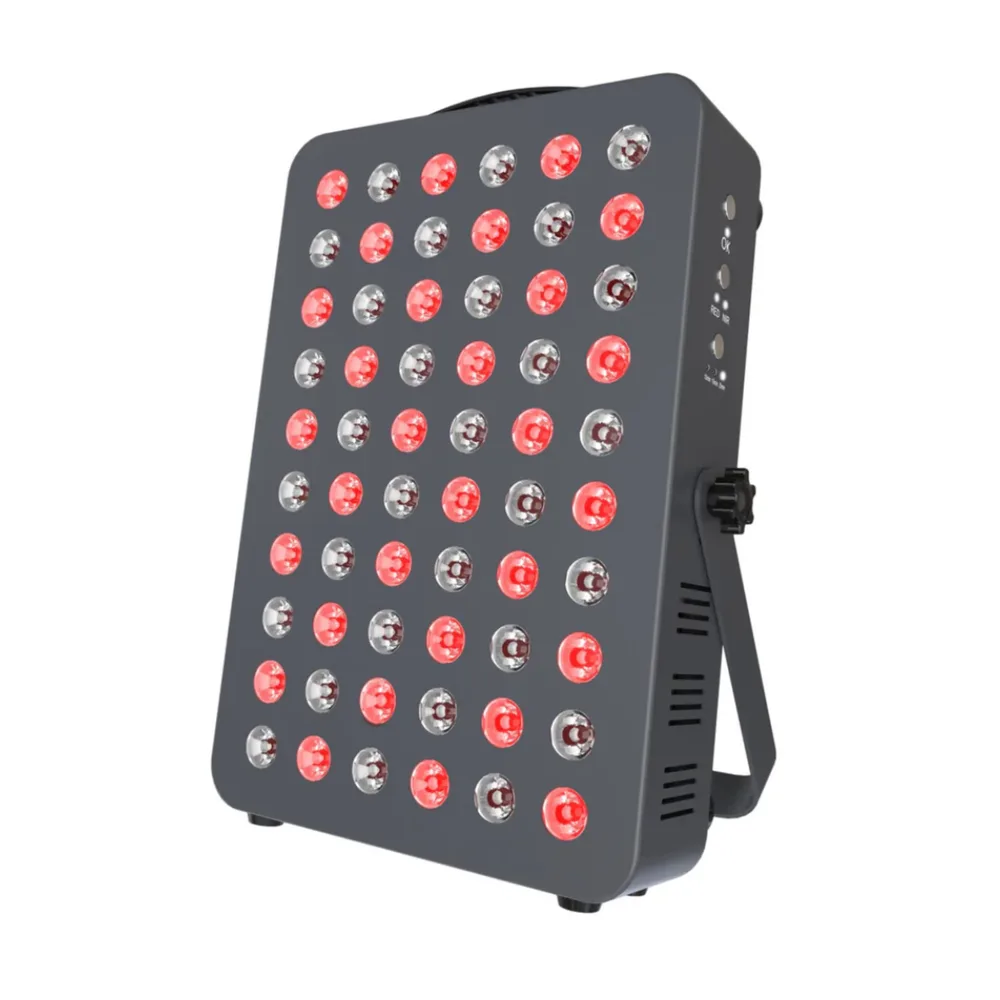
Red light devices now run from a flashlight-sized torch that fits a jacket pocket to a 36-inch, 25-pound tower that wants its own stand, and size is the first decision that locks in everything else: cost, mounting, noise, and how much of you the light reaches in one session. The light itself barely changes across that spread, since nearly every mainstream device pairs 660nm red with 850nm near-infrared. You are choosing a coverage area and a form factor rather than a different kind of light, so match the hardware to the body region you plan to point it at and the rest of the spec sheet gets easier to read.
The three size classes
The market sorts into three tiers. Handheld torches put a small LED head on a battery-powered wand for one spot at a time. Compact panels, typically 60 LEDs in a housing around 12 or 13 inches tall, sit on a desk or hang from a door and cover a single region such as the face and shoulders. Towers stack 200 to 300 LEDs into columns of roughly 36 inches and cover most of a torso or back from one position.
Pricing follows the ladder closely. Handhelds sit around the hundred-dollar mark, compact 60-LED panels cluster in the $150 to $200 range at list, and towers run from about $700 to $1,200 depending on LED count, with street prices frequently undercutting all of those numbers.
Handheld torches, no cord attached
LifePro’s LumiCure Torchlight is the reference point for the class. It runs cordless on two 3000mAh 18650 lithium-ion batteries, good for up to about six hours per charge, and a 5-minute auto shut-off ends each session without a decision from you. A wrist strap, a zippered travel case, and a dedicated battery charger come in the box. The tradeoff is baked into the format: the LED head covers one small spot at a time, and there is no stand or mount for hands-free use. Pick a torch when portability outranks coverage, or as a travel companion to a larger panel at home.
Compact panels, the tabletop class
Sixty-LED panels are where most buyers land first. Bestqool’s BQ60 measures 13.1 by 8.4 inches, weighs 4.8 pounds, and documents its coverage precisely: 17.2 by 11.8 inches at a 6-inch distance. That is a face, a shoulder, or a knee, one region per session. Hooga’s HG300 runs the same playbook at 12.2 by 8.2 inches and 6 pounds with a swing-out kickstand for desk use, while the BQ60 ships with a door hook and adjustable rope instead of a stand. Both include protective goggles and built-in timers, which have become standard equipment even at this end of the market.
Towers, coverage with consequences
Move to 200 LEDs and the physics gets heavier. Mito Red Light’s MitoMAX 2.0 stretches its LED array across a 36-inch column and weighs 20 pounds, enough to cover most of a torso or back in one position and enough to demand serious hanging hardware. Its bigger sibling, the 300-LED MitoMEGA, reaches 25 pounds. Megelin’s TruWellness family spans the same spread at lower list prices, from the 60-LED, 15.2-inch T300 up to the 300-LED, 36.2-inch T1500, though its horizontal stand is a separate purchase that costs about as much as the entry panel in the family. Fan cooling also scales with size; the MitoMAX carries two auto-activating fans that Mito ties to its 50,000-hour LED lifespan rating, and fans need airflow clearance wherever the panel hangs.
Mito publishes the clearest size ladder within one product family, which makes it a useful map of the whole market:
| Panel | LEDs | Array size | Weight |
|---|---|---|---|
| MitoMIN | 60 | 12 in | 6 lb |
| MitoMID | 100 | 19 in | 9 lb |
| MitoMAX 2.0 | 200 | 36 in | 20 lb |
| MitoMEGA | 300 | 36 x 12 in | 25 lb |
Matching size to use
Work backward from the body region and the room. A torch earns its keep for one small spot and for suitcases. Compact panels fit a desk, a bathroom counter, or the back of a door and handle one region per session; step up only when repositioning a small panel across multiple regions gets old. The tower class makes sense once you want a torso-wide field in a single position, you have a wall, door, or stand that can hold 20-plus pounds, and the budget stretches several times past the compact tier.
The category keeps widening in both directions. Grand View Research valued the red light device market at $533.8 million in 2025 and projects $1,133.1 million by 2033, a 9.8 percent annual growth rate, and product families like Mito’s and Megelin’s now sell the same LED design at four different sizes. That is good news for buyers: pick the coverage you need today, and the same brand usually offers the bigger or smaller version when your needs change.
Questions, answered once
Do handheld red light torches need an outlet nearby?
No. LifePro's LumiCure Torchlight runs on two 3000mAh 18650 lithium-ion batteries and manages up to about six hours per charge. A dedicated charger with an LED indicator comes in the box, so the wand itself never plugs into the wall.
How much area does a compact 60-LED panel actually cover?
Bestqool documents the BQ60's coverage at 17.2 by 11.8 inches from 6 inches away, which is typical for the class. Plan on one body region per session and reposition the panel for anything more.
Can a 200-LED tower hang on a standard door?
It can, but the hardware has to be up to the job, since the MitoMAX 2.0 weighs 20 pounds and the 300-LED MitoMEGA 25 pounds. Floor and horizontal stands are often sold separately, and Megelin's costs about as much as its smallest panel.
Is there a middle size between a compact panel and a full tower?
Yes. Mito's 100-LED MitoMID runs a 19-inch array at 9 pounds, and Megelin's family includes similar steps between its smallest and largest models. Mid-size panels cover more than a single face-and-shoulders region without tower weight or tower pricing.