The NASA posture behind zero-gravity recliners
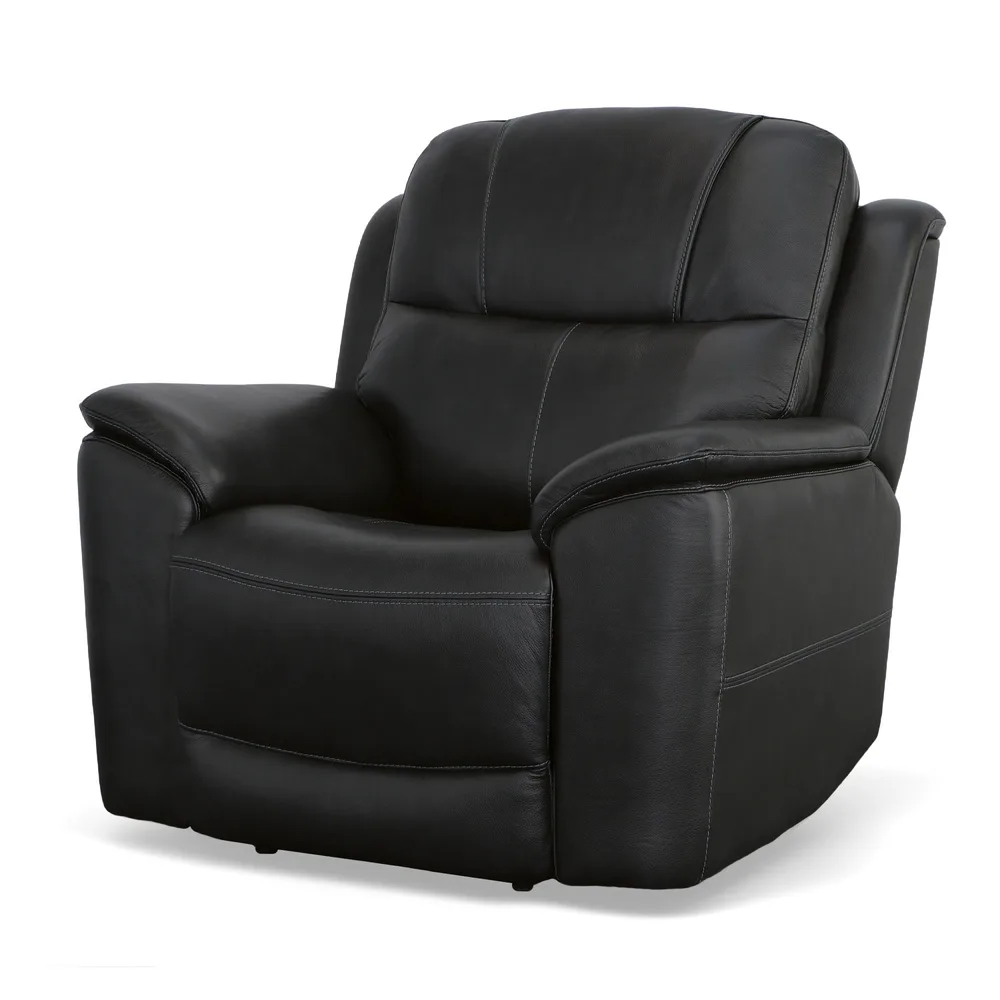
“Zero gravity” may be the hardest-working phrase in recliner marketing, stamped on everything from mesh patio loungers to four-figure leather chairs. The term has a real origin, and a surprisingly specific one: NASA research into how the human body rests when gravity stops pulling on it. Once you know what the position actually is, and how differently manufacturers build it, telling genuine recline geometry from a sticker on the box gets much easier.
The Skylab research behind the phrase
The story starts aboard Skylab, America’s first space station. NASA measured 12 astronauts relaxing in microgravity and found their bodies settled into consistent joint angles, a relaxed half-crouch that the body appears to prefer when nothing forces it flat or upright. The agency documented this as the neutral body posture in its Man-Systems Integration Standards, NASA-STD-3000, in the 1980s. That standard remains the reference furniture designers cite when they lay out zero-gravity recline geometry. So the phrase is borrowed, but it is borrowed from somewhere real.
What the position means in a living room
A zero-gravity recliner approximates that posture under normal gravity: torso tipped back, legs raised, joints resting near the angles the Skylab crews settled into. Makers describe the sensation in their own words. Flexsteel, for one, calls its Zero Gravity mode a feeling of weightlessness. Read those descriptions for what they are, a comfort position for long lounging sessions, nothing more exotic. What NASA supplied was geometry, a set of joint angles a chair can copy. What any given chair does with those angles varies a great deal, which is why the hardware matters more than the label.
Two ways manufacturers build it
Dedicated zero-gravity loungers commit their whole silhouette to the position. Svago’s ZGR Newton is the clearest example: a motorized lounger that stands 47.2 inches tall upright, then stretches to 62.2 inches long and drops to 33.1 inches tall as it lays you back. Nothing about the shape pretends to be a wingback. The form exists to serve the recline, and the tradeoff is a piece that always looks like a lounger, even in a formal room.
Traditional recliners with a zero-gravity mode take the opposite path. Hooker’s Duncan looks like a classic rolled-arm leather recliner, yet powers all the way into a zero-gravity position with a 72-inch full-recline length. Flexsteel’s Crew treats Zero Gravity as one mode among several on a triple-power chair, with independent motors for recline, headrest, and lumbar. Amazon now carries both philosophies side by side, motorized dedicated loungers and conventional power recliners with the mode built in, often on the same results page, which is exactly where shoppers get confused.
Four checks that separate position from buzzword
Start with published recline geometry. A maker serious about the position tells you what the chair becomes when it opens: Svago publishes the Newton’s reclined length and height, and Hooker publishes the Duncan’s 72-inch full-recline figure. A listing that says “zero gravity” without a single reclined dimension is asking you to take the posture on faith.
Check wall clearance next. Power recliners in this class need 5 to 7 inches behind them, 5 for the Flexsteel Crew and 7 for the Hooker Duncan, far less than the swing arc of many manual chairs. The number tells you whether the chair reclines by sliding forward on its base, the design that makes a deep zero-gravity angle workable in a normal room.
Weight capacity is the spec people skip. Verified ratings in the luxury tier run from 250 pounds on the Hooker Duncan to 400 pounds on the Svago Newton, a wide enough spread that capacity has to be confirmed per model, never assumed from size or price.
Motorization rounds out the list. Power mechanisms are estimated to dominate recliner market revenue in 2025, so a powered zero-gravity mode is now the mainstream expectation rather than a premium add-on. A lever-operated chair wearing the label is doing the position by halves, because holding a precise joint-angle posture is what motors are for.
Which design belongs on your shortlist
The category is healthy and growing, roughly a $4.2 billion global market in 2024 heading toward $6.4 billion by 2033, with North America expected to take about a third of it in 2025. Verified pricing runs from around $500 at the lift-chair end to the mid four figures for designer leather, so the label appears at nearly every budget.
Choose a dedicated lounger like the Newton if the recline is the whole point, the chair gets its own corner, and you do not need it to pass as living-room furniture. Choose a traditional recliner with a zero-gravity mode, like the Duncan or the Crew, if the chair has to earn its keep upright too, hosting guests and matching a sofa between naps. Skip the feature entirely if you mostly sit upright to read and rarely stretch out, since you would pay for motors and geometry you never use. Whichever way you lean, buy from the spec sheet, not the sticker. NASA measured the posture five decades ago, and the makers who take it seriously publish the numbers to prove it.
Questions, answered once
Did NASA invent the zero-gravity recliner?
No. NASA measured how 12 astronauts' bodies rested while relaxing in microgravity aboard Skylab and documented the resulting neutral body posture in NASA-STD-3000 in the 1980s. Furniture makers later borrowed that geometry for recliner design.
Does zero gravity mean the chair reclines completely flat?
Not usually. The position keeps joints bent near the angles NASA measured, with legs raised and the torso tipped back rather than horizontal. Reclined dimensions vary by model, from 62.2 inches long on the Svago Newton to a 72-inch full-recline length on the Hooker Duncan.
How much space does a zero-gravity recliner need?
Plan around the reclined footprint, not the upright one. Power recliners in this class need only 5 to 7 inches of wall clearance, but a chair like the Hooker Duncan stretches to 72 inches when fully open.
Can a normal-looking recliner really hit the zero-gravity position?
Yes. Hooker's Duncan and Flexsteel's Crew both look like traditional leather recliners and power into a zero-gravity position. The dedicated-lounger shape is one way to build the posture, not the only way.